
Data shapes every marketing decision we make today. By examining customer behavior, preferences, and interactions, we can develop strategies that connect marketing efforts directly to measurable results. Data-driven marketing strategies help us identify what works, eliminate guesswork, and allocate resources where they deliver the most impact.

We combine data from multiple channels to understand patterns and reveal opportunities. With the right tools and analysis, we can personalize campaigns, improve targeting, and strengthen customer relationships. This approach supports sustainable growth while reducing wasted budget on unproven tactics.
In this article, we explore how to implement effective data-driven marketing strategies that align with business goals and enhance performance. We also address common questions that arise when integrating data into everyday marketing operations.
Implementing Effective Data-Driven Marketing Strategies

Effective data-driven marketing depends on structured goal-setting, accurate data integration, meaningful audience segmentation, and the application of advanced analytics. By aligning our marketing strategies with reliable insights and measurable outcomes, we can optimize performance, resource allocation, and ROI.
Establishing Goals and KPIs
We start by defining specific, measurable, achievable, relevant, and time-bound (SMART) goals. Clear objectives keep our data analysis focused and ensure that each marketing campaign contributes directly to business priorities.
Performance metrics such as conversion rate, customer acquisition cost, engagement rate, and return on ad spend (ROAS) provide quantifiable benchmarks. Tracking these KPIs helps us identify patterns, compare results across campaigns, and determine which channels deliver the strongest performance.
We document our KPIs in dashboards or data analytics platforms, enabling real-time performance tracking. Regular reviews of these indicators allow us to adjust tactics quickly when trends shift. The goal is consistent alignment between strategy and measurable impact.
Collecting and Integrating High-Quality Data
Accurate data collection lays the foundation for effective marketing decisions. We draw from multiple sources—CRM systems, web analytics, social media metrics, and customer surveys—to create a comprehensive view of customer behavior.
However, raw data is only useful when it meets high standards of consistency and reliability. We focus on improving data quality by removing duplicates, standardizing formats, and verifying input accuracy. Poor-quality data skews results and weakens decision-making.
Integration is equally important. Connecting our tools through a customer data platform (CDP) allows us to unify profiles and link behavioral, transactional, and demographic information. This integration provides a single, accurate source of truth for marketing analytics and makes campaign insights actionable across teams.
Customer Segmentation and Personalization
Once we trust our data, we use it to build detailed customer segments based on demographics, behaviors, and purchase intent. These segments support focused communication that reflects distinct preferences and needs.
We apply personalization within campaigns to deliver relevant messages through preferred channels. For example, targeting returning customers with loyalty offers or customizing product recommendations based on browsing history enhances engagement and conversion rates.
Segmentation also guides resource allocation, helping us invest in segments with higher revenue potential. By regularly revisiting segment definitions using updated data, we ensure that our audience targeting remains accurate and adapts to changes in behavior or market conditions.
Leveraging Predictive Analytics and Machine Learning
Advanced analytics tools amplify our ability to act proactively rather than reactively. Predictive analytics uses historical and real-time data to forecast future outcomes such as churn risk or purchase likelihood.
We can model customer lifetime value, anticipate seasonal demand shifts, and fine-tune pricing strategies using algorithmic insights. Integrating machine learning into our marketing processes allows for automatic pattern recognition and continuous optimization.
Examples include automated bidding in ad campaigns, recommendation engines, and dynamic content delivery. These systems learn from ongoing performance data, refining predictions and improving results over time. Data-driven decisions supported by predictive models help us stay agile in fast-moving markets and maintain competitive efficiency.
Frequently Asked Questions
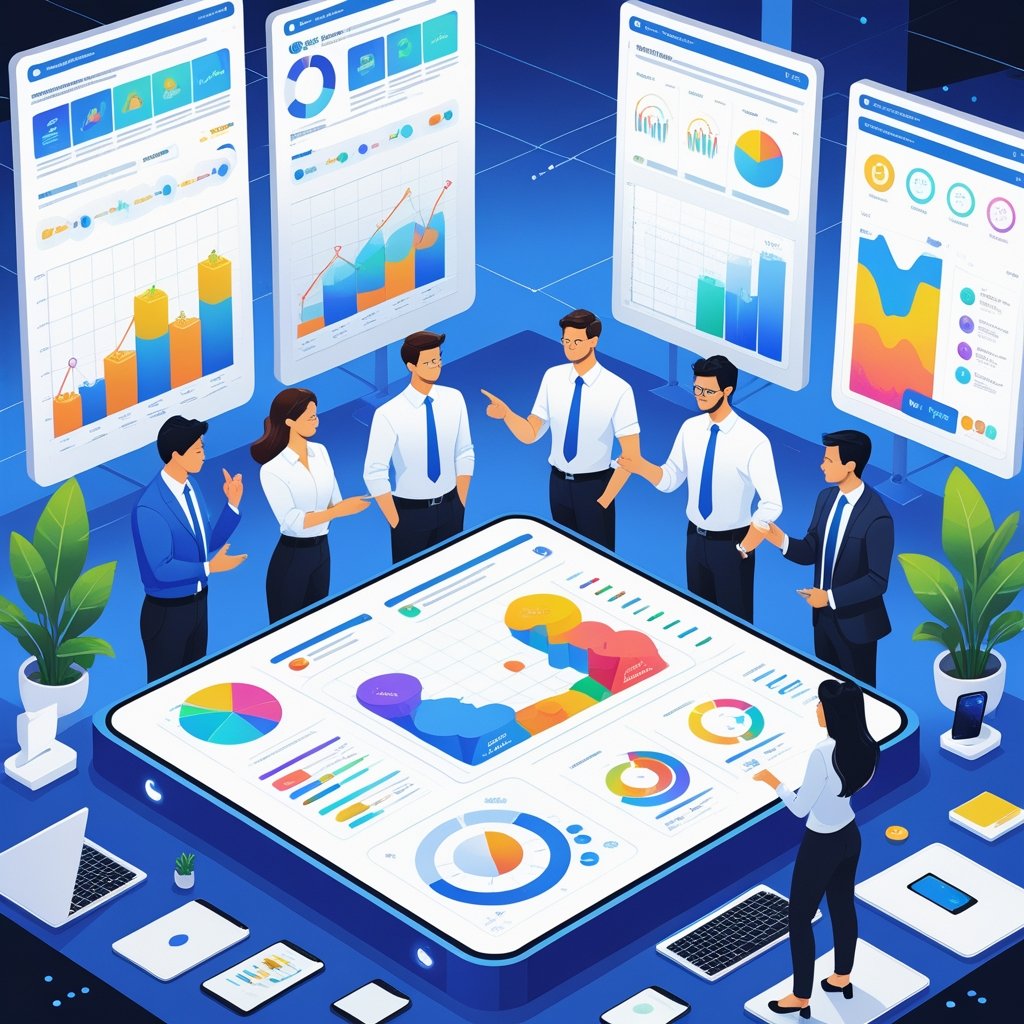
We approach data-driven marketing by focusing on precision, measurement, and continuous improvement. Applying clear metrics, reliable tools, and structured data analysis helps us refine campaigns, manage common challenges, and tailor customer experiences effectively.
What are the key components of a successful data-driven marketing strategy?
A strong data-driven marketing strategy includes data collection, analysis, segmentation, personalization, and performance measurement. We gather data from various touchpoints such as web analytics, social platforms, and customer relationship systems.
We then analyze patterns and behaviors to identify opportunities for targeted actions. Regular evaluation ensures that each step contributes to measurable business goals.
How do businesses effectively measure the impact of their data-driven marketing efforts?
We measure impact through key performance indicators (KPIs) like conversion rate, customer retention, engagement metrics, and ROI. Tracking tools such as Google Analytics or CRM dashboards give visibility into how campaigns perform over time.
Using A/B testing and attribution modeling, we determine which elements drive the strongest results and make adjustments based on verified insights.
What are some common challenges when implementing data-driven marketing techniques?
The biggest challenges include ensuring data quality, maintaining privacy compliance, and managing technical complexity. Incomplete or inaccurate data can undermine decisions, and evolving regulations require careful handling of customer information.
Many teams also face skill gaps in data analysis or limited access to advanced tools, which can slow strategy adoption.
Which tools and technologies are essential for analyzing marketing data?
We rely on a combination of analytics platforms, business intelligence tools, and automation systems. Popular options include Google Analytics, Tableau, HubSpot, and customer data platforms (CDPs) that unify cross-channel information.
Machine learning and predictive analytics tools further enhance accuracy by revealing behavioral trends and future opportunities.
How can small businesses leverage data-driven strategies with limited resources?
Small businesses can start with first-party data such as website visits, email engagement, and social insights. Free tools and simplified dashboards provide baseline data for informed decision-making.
By focusing on specific, attainable goals and optimizing resources on the most productive channels, smaller teams can still achieve meaningful results.
In what ways can data-driven marketing personalize customer experiences?
Data enables us to identify customer preferences, purchase patterns, and interaction histories. This allows the creation of personalized recommendations, targeted messages, and tailored offers across email, ads, and content marketing.
When implemented responsibly, personalization strengthens loyalty and enhances the relevance of each customer touchpoint.